
As one of the largest real estate lead generation firms in India, one of our biggest grievances is when our real estate clients tell us that they are receiving ‘fake leads’. The fact is that we know for sure that 90% of the time these leads are actually real.
We have been executing real estate advertising campaigns for well over a decade now and generating quality real estate leads with intent to purchase for varied projects, budget range and cities. And many of our clients have been successfully converting those leads into sales of their properties.
Thus, it is for this reason that we are writing this blog to shed some light on what fake leads are and how to recognize them as ‘fake’ or ‘real’.
What is a Fake Lead?
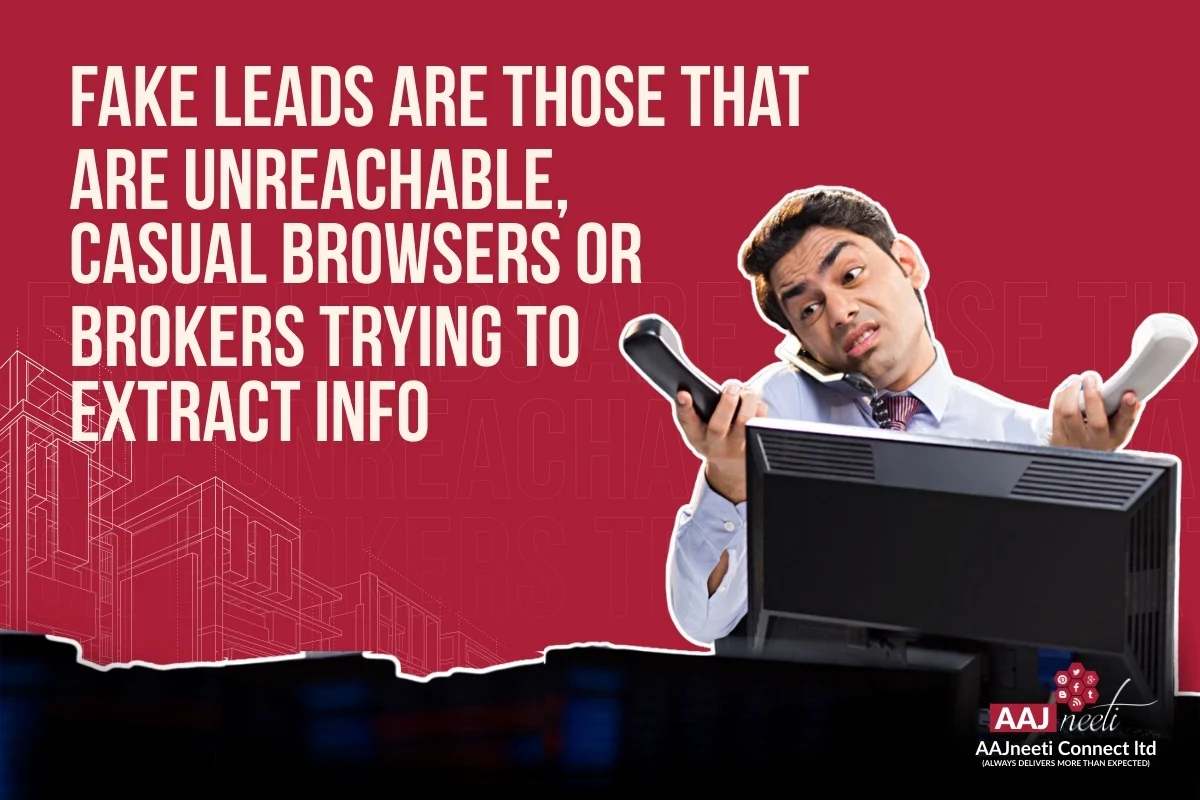
Even with our best offer, there are times when some leads cannot be contacted due to them entering the wrong contact information or making typos. You call multiple times and leave multiple messages, but either the contact information does not exist, or you are ignored completely, and even if the lead picks up the call, he denies that he has filled out the lead form.
These leads are obviously fake, and we quickly replace them.
However, sometimes the campaign does not have any faults. There have been times when your competitors, like the brokers and channel partners, have filled up your lead form just so that they could get more information from you (like inventory or market price). These leads would only pick up your calls for getting the information and then just vanish into thin air.
Calling them ‘fake’ is fair too, and if you bring such leads to our notice, we replace them too.
Here’s a Real Estate Lead Cycle for you to help you decide what a fake lead is:
A New Lead Comes In Lead Shared with Client (through Google Sheet or in Real-Time through CRM) Respond to Lead within 24 Hours. If Not Done, it’s ‘Not a Fake Lead’, it’s a lead nurturing process failure. Most leads go cold if not contacted quickly.
If you attempt the call within the first 24 hours, and the call gets connected, and the lead turns out to be interested in the project, location and budget range, it is ‘Not a Fake Lead’. It is a ‘Qualified Lead’, ready to go into the next stage of the Lead Nurturing Process.
If the call doesn’t get connected and multiple attempts have been made to contact the lead at different times and using different channels, there might be two options:
- If it is always unreachable, it might be ‘Fake’.
- If the lead responds to the call or message but says that he or she did not fill out the form, it is definitely ‘Fake’.
- But if the Real Estate Lead responds to the call and matches our qualification criteria (aligns with our Location, Budget, and accepts that they are interested in the Project), it’s a ‘Qualified Lead’.
The following types of real estate leads are not fake:
- Didn’t pick up the first call,
- Compared your project with others and then did not buy yours,
- Asked for time or for you to call back,
- Is only exploring for now,
- Is waiting for approval by wife, mom, dad (or family).
These are normal buyer behaviours, especially in high-ticket decisions like a real estate transaction.
How the ‘Fake Lead’ Narrative is Hurting Your Real Estate Sales?
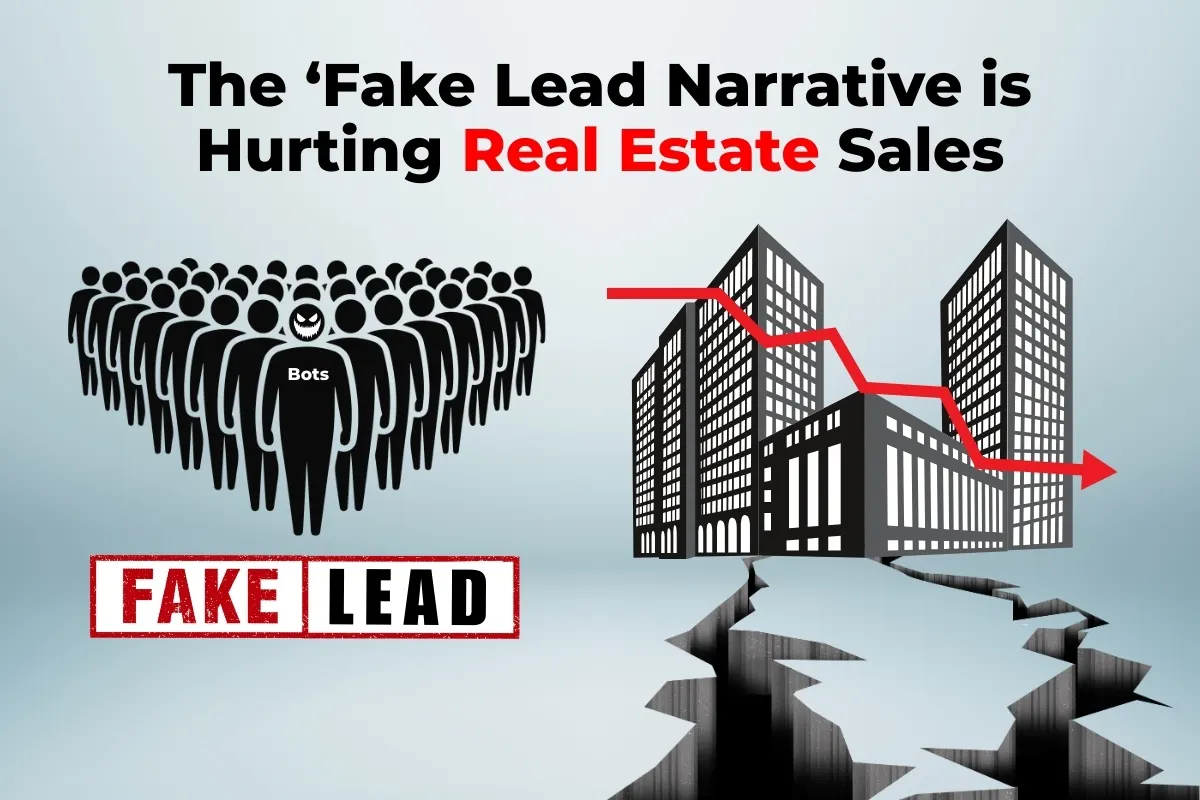
One big problem we face with our clients who really believe they are getting ‘fake leads’ is that they are not open to any analytical discussions. For them, the matter is over simply when they label a lead as ‘fake’. They are not interested in providing detailed contextual feedback for leads, looking at the lead response time, monitoring call recordings, and checking if their team is nurturing the lead properly.
They blame the lead generation agency and get stuck in the denial mode when it comes to their own processes.
And this is what their real estate sales are mostly.
There is only so much we can do. At ACL, we work with dozens of real estate lead generation campaigns every day. The leads we generated are logged properly with all the related details. We expect feedback from our clients, because it becomes the basis of our learning. When they just blame the leads as ‘fake’ and refuse to discuss or analyse it anymore, it becomes a bottleneck for us.
We call them ‘fake leads,’ and if we find them genuine, we share our call recordings with our clients.
Some clients consider our ‘evidence’ to take a step back and fix their processes…and some don’t. And we don’t know how to help those who choose to keep repeating the same mistakes instead of identifying issues and fixing them.
Online real estate lead generation systems are highly measurable. It is easy to find out the real estate campaigns’ weaknesses and work on them (and we take care of them). But it’s the ‘human’ factors (the tone of the caller, the skills of the salesperson, how quickly the lead was responded to) that can make all the difference to your real estate sales.
What We Found When We Called Leads Marked as Fake?
When our clients frequently mark leads as ‘fake’, ‘invalid’, ‘not interested’ or ‘junk’, we ask them for more context. We ask them to add the reasons so that we can optimize their campaigns.
But we also do one more process.
We have some dedicated telecallers to verify these leads. And we often find that many of them:
- confirmed that they filled out the lead form to know more about the project,
- were genuinely looking for a property in that area, and
- had the given budget range.
We have shared these call recordings with our clients as proof that these leads were genuine. They were either contacted too late or at an inconvenient time, or the first call put them off for some reason.
Hence, we have come up with a framework to help you identify the real issue why real estate leads you are receiving are not converting.
Real Estate Lead Audit Framework: We Suggest To Our Clients
Here’s a framework you can use to identify where your leads are dying.
Level 1: Lead Response Time Audit
Weekly Review:
- No. of Real Estate Leads Received
- Average Lead Response Time (for the first call)
- No. of Leads Contacted within 24 hours
- No. of Leads Contacted within 5 minutes
- No. of Leads Contacted after 30 minutes
Remember, if you do not contact the lead within 24 hours, they can’t be labelled as ‘fake leads’. We consider them as qualified automatically.
Questions to Ask:
- Did you receive the lead in real-time?
- Was it assigned to the available salesperson immediately?
- If the assigned person didn’t respond to the lead, was it passed to the backup and how long did it take to do so?
Level 2: First Call Quality Audit
Weekly Review at least 10 Random Calls per Salesperson. Check:
- Did the salesperson introduce themselves clearly?
- Did they confirm the inquiry politely?
- Did they ask the intent of the customer before pitching the project?
- Did they listen more than they spoke?
- Did they sound calm and confident throughout the conversation?
- Did they know about the project and answer their questions well?
You should also check:
- If the caller sounded like they were reading a script?
- Did they sound like a call centre person?
- Did they keep interrupting the buyer?
- Were they too aggressive in their pitching?
The first call is often the point where most leads drop. If the callers are not trained well, we cannot blame the leads. The sales callers need to be trained.
We have seen that when the clients used this lead audit framework judiciously, the incidents of them marking our leads as ‘fake’ or even ‘invalid’ dropped by 87%.
Real Estate Buyers Have Changed. And So Do The Sales Processes.
Real estate buyers in India and abroad have become more cautious now. They do not trust brokers or developers alone and instead, research heavily, compare various projects in locations they prefer and their respective budget ranges, and take their time in making a final decision. Hence, expecting an online real estate lead to walk in and book a plot or a flat straightaway is not realistic or practical anymore.
In fact, many times the lead inquiries we receive fall in the middle of buyers’ research journeys. Such leads may already have checked various portals, asked their friends and family members, watched YouTube videos of different projects, checked the neighbourhood and the connectivity to the shortlisted projects, and compared their prices.
Some of the things most real estate buyers these days often look at are:
- 5-10 projects in micro-locations they are targeting,
- Developer or builder’s credibility and delivery history,
- Floor plans, pricing, and payment plans, and
- Rental income and appreciation potential of the property.
They get worried about delayed possessions, regulatory compliance, EMIs, their job or income stability, resale options, and a lot more.
Brochures alone can’t win them over. Rushing tactics don’t work on them easily. Big brand names alone are not enough. They cross-check everything, Google everything on the project, the developer and the neighbourhood, ask questions, and try to read between the lines. Aggressive sales tactics or vague answers to their concrete queries can cost you a genuine buyer.
Online real estate leads merely signal the interest of a genuine buyer, a probability that he or she might buy from you. It’s up to you to lead them to close deals.
Here’s what we, at ACL, have observed about how real estate leads and buyer behaviours have changed over the past decade:
| Past Behaviours of Real Estate Leads | Current Behaviours of Real Estate Leads |
| Filling out the lead form indicated buying intent | Filling out the lead form indicated research intent |
| The first call was the most important | People take time in deciding whom to talk with |
| People trusted brokers more easily | People look for clarity and documentation |
| Leads were easier to convert, and they made decisions quickly | People are more cautious in making decisions |
| Persuasive sales tactics still worked | People are looking for advisors, not sellers |
| Fewer follow-ups worked | More in-depth follow-ups are required |
| If the leads went silent, it almost always meant rejection. | If the leads go silent, it might mean that they want to think more about it. Retargeting ads work well in such cases. |
CRM Lead Feedback That Helps Us Help You Better
We request our clients to give us lead feedback promptly and in detail. Some of the lead feedback tags that can really helps us optimize your real estate ad campaigns better and offer you better leads are:
- Missed The First Call
- Asked To Call Back
- Asked Detailed Questions
- Comparing With Other Projects (Share Project Names If Possible)
- Waiting For Family Approval
- Budget Aligned, but Not Sure
- Prefers WhatsApp interactions
- In the Early Research Stage
- Went Cold After Initial Interaction
- Clear Rejection After Initial Interaction
- Fake because denied the enquiry
At ACL, we work as your real estate growth partner. Book a consultation today to know more about real estate lead generation process.
Read Also: Real Estate Lead Fails You Need To Stop